
Time isn’t renewable, but access to renewable energy, like solar, empowers women to reclaim and redistribute it.
Time cannot be replenished, given back or redone.
Energy poverty takes away people’s time, especially for women.
What is Energy Poverty?
Energy poverty refers to the lack of access to clean, safe, reliable and affordable energy, which can significantly dictate daily life, particularly for women.
The Intersection of Energy Poverty, Gender Norms and Domestic Roles
You might ask, ‘how much time can energy poverty take from women?’
40 hours a week.
On average, women spend 40 hours of their week collecting fuel and preparing meals (Progress on the Sustainable Development Goals Gender Snapshot 2024). Women could reclaim and redistribute these 40 hours if they had access to clean energy.
Social and gender norms often place the majority of household responsibilities on women, who spend 2.5 times more time on unpaid care and domestic work than men each day (SDG Report 2024). In energy-poor areas, women face the additional burden of collecting fuel, which compounds their already lengthy list of chores. Countless hours are spent gathering fuels such as kerosene, firewood, or biomass just to cook, provide light, and keep their homes warm. This struggle to meet basic energy needs not only consumes valuable time but also exacerbates gender inequality. Access to clean energy empowers women to reclaim their time and affirms their right to participate fully in society, thereby supporting the broader goal of equality.
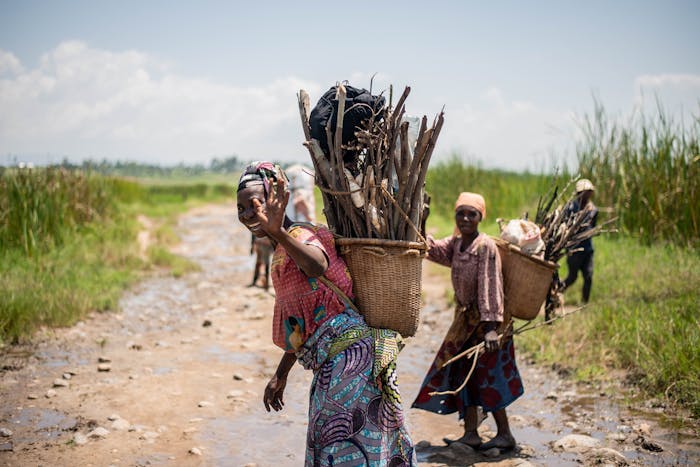
Firewood: Photo by Safari Consoler from Pexels
Health Risks Linked to Energy Poverty
Women’s time spent on these chores increases risks to their health, wellbeing and safety. Carrying heavy loads of firewood or gas bottles increases the risk of musculoskeletal injuries. Collecting fuel often requires women to walk long distances through remote areas or after dark, which can endanger their safety.
World Health Organization (WHO) data indicates
“Each year, 3.2 million people die prematurely from illnesses attributable to the household air pollution caused by the incomplete combustion of solid fuels and kerosene used for cooking”.
Women face a greater risk of respiratory diseases, such as chronic obstructive pulmonary disease (COPD) and lung cancer, due to constant exposure to toxic smoke from household cooking, lighting or heating.
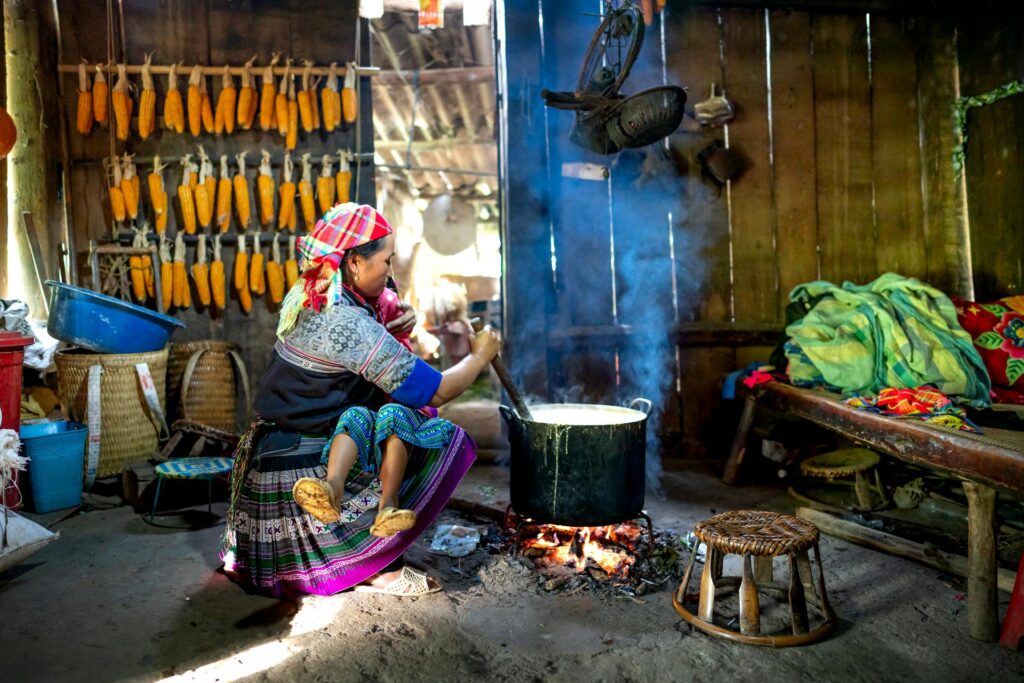
Cooking: Photo by Quang Nguyen Vinh from Pexels
Reclaiming Time for Learning and Economic Independence
Time lost to energy poverty has a profound impact on women’s education. Education is instrumental in raising men, women and children out of poverty. Yet, women represent two-thirds of the 754 million adults globally who still cannot read and write (UNESCO).
Access to renewable energy can change this narrative. With energy access, women can reclaim their time to pursue education, gain new skills, and engage in income-generating activities, leading to greater economic independence and participation. With energy access, women can pursue education; a basic right that enables them to contribute meaningfully to their communities and encourages their own empowerment.
The benefits of energy access extend beyond individual women; they also influence future generations. As Sarah from Manus, Papua New Guinea states,
“Us mamas who do the many housework need lights, and many times when we get the one lamp to prepare market stuff, the children miss out on homework and studies.”
Her words highlight the difficult choices women face between fulfilling essential household responsibilities and supporting their children’s education. Energy poverty enforces these decisions on women when they shouldn’t have to make them in the first place.
Human Rights Implications
If energy poverty affects women the most, how can they fully exercise the human rights meant for all? Articles 22, 25, and 26 of the Universal Declaration of Human Rights emphasise the right to participate in social and economic life, the right to an adequate standard of living, and the right to education. When energy poverty holds women back, their basic human rights remain out of reach, but energy access empowers women to greater exercise their rights and freedoms.
Pihi Manus Association distributing JuniorBuddies
Empowerment through Energy Access
Reclaiming time lost to energy poverty and reallocating it to education, health or economic activity is essential to women’s empowerment. As women engage in educational opportunities, they challenge societal norms and redefine their roles within their communities. Through a collaborative effort, Wantaim PNG and the Pihi Manus Association have empowered women from the association to distribute SolarBuddy devices. Susan Pokupp, Pihi Ward President in Manus, Papua New Guinea, insightfully shares,
“While the students get to study with the use of these lights, the men in our community…are seeing how (women’s) existence has made a difference in our community.”
Susan’s insight emphasises that women’s active participation is a catalyst for societal change, enabling communities to recognise and value their contributions, leading to more inclusive and equitable environments.
When women are empowered, a community is uplifted.
Energy Access: Greater Rights, Equality and Empowerment for Women
Women shouldn’t have to spend 40 hours a week collecting fuel just to meet basic household needs. Energy poverty controls their time, limits their opportunities, and holds them back from education, economic independence, and better health. But there is a solution – clean, renewable energy (like solar). By ensuring energy access for all women and girls, they can break down these barriers, giving them the time and freedom to pursue education, earn an income, participate and lead in their communities.
This International Women’s Day, we recognise that energy access acts as a foundational tool for women’s rights, equality, and empowerment, allowing women to transform their time into opportunities for a brighter future – free from the control of energy poverty.
References
https://www.un.org/en/observances/womens-day
https://unstats.un.org/sdgs/report/2024/The-Sustainable-Development-Goals-Report-2024.pdf
https://energia.org/what-we-do/why-gender-and-energy
https://www.who.int/news-room/fact-sheets/detail/household-air-pollution-and-health
